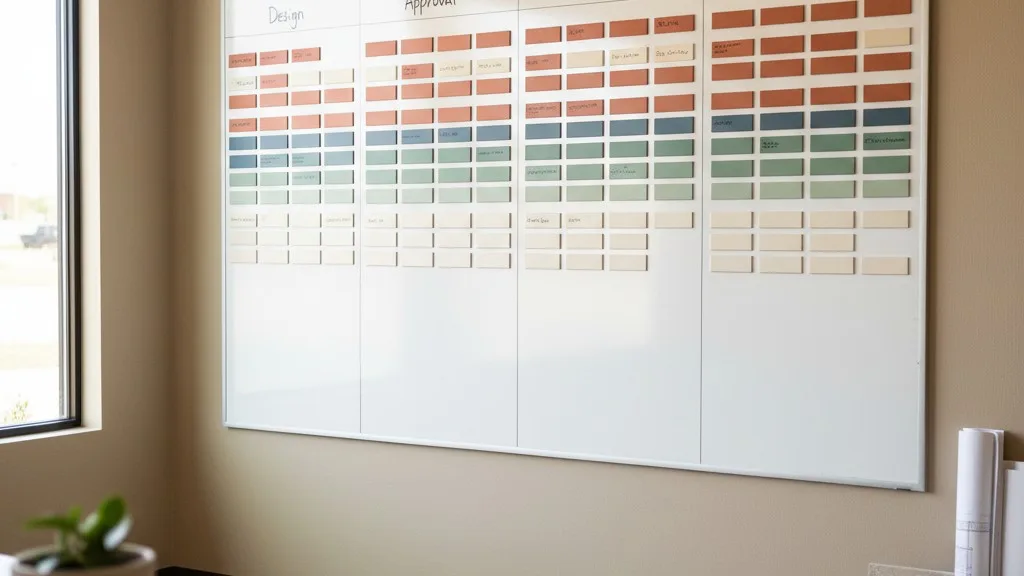
Inaccurate monument estimates are more than just a paperwork problem; they directly erode your shop’s profitability and can damage the trust you build with families. When a final invoice is higher than the quote, it creates a difficult conversation. When it’s too low, you absorb a loss that could have been prevented. Creating accurate monument estimates requires a systematic approach that accounts for every variable, from the raw slab to the final setting.
This guide provides a detailed framework for identifying all your costs, standardizing your pricing, and building a quoting process you can rely on. By breaking down each component of a monument project, you can ensure your estimates are fair, consistent, and sustainable for your business.
Deconstructing Every Cost in a Monument Project
The first step toward accurate estimates is to stop guessing and start tracking. A truly comprehensive quote is built from the ground up, accounting for every piece of material, every minute of labor, and every external fee associated with the job. Many shops lose margin by overlooking small but cumulative costs. A detailed cost breakdown is your foundation.
Material Costs
Your largest direct cost is typically the stone itself, but many other materials are involved.
- Stone: This is your primary material. Your pricing model must account for the specific type of stone (granite, marble, bronze), its color, and its grade. You need a consistent method for costing the stone used, whether it's by the square foot, by weight, or by the specific dimensions of the die and base. Don't forget to factor in waste. If cutting a die from a slab leaves an unusable remnant, the cost of that waste must be absorbed into the price of the finished piece.
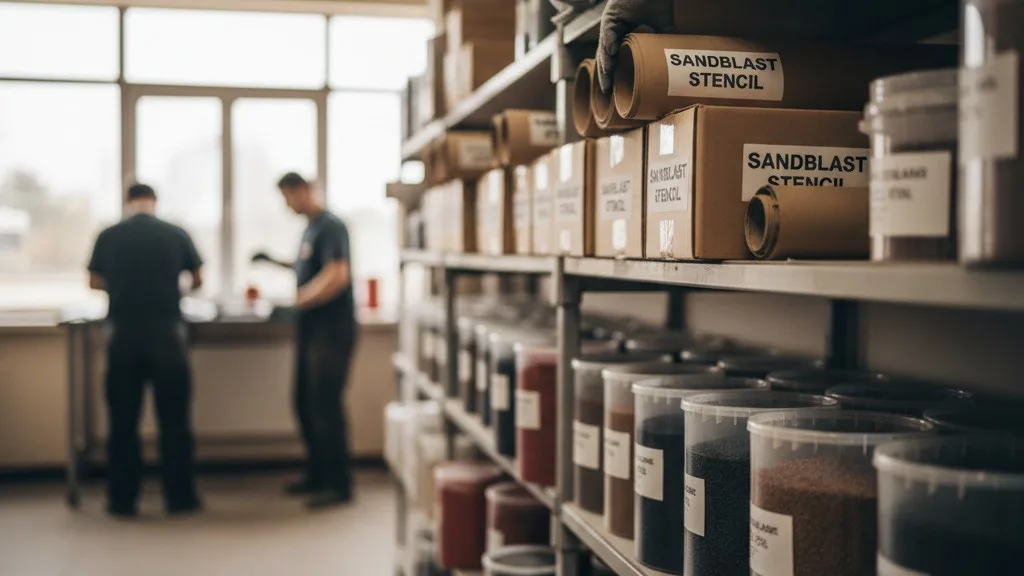
- Consumables: These are the items used up during the production process. This includes sandblasting stencil, blasting grit, diamond blades, polishing pads, and setting compound. While a single blade's wear might seem minor, these costs add up significantly over dozens of jobs. Track your purchase volume and cost for these items to calculate a standard consumable cost per job or per hour of production.
- Foundation Materials: If you pour your own concrete foundations, the cost of cement, sand, gravel, and any rebar or wire mesh must be included. Calculate the cost per cubic foot of your standard mix and apply it based on the required foundation size for a given monument.
- Ancillary Items: Does the design include bronze emblems, ceramic photos, or flower vases? These items have direct costs that are easy to forget in a complex order. Maintain a clear price list for these add-ons and ensure they are always included in the initial quote.
Labor Costs
Your team's time is one of your most valuable and variable expenses. To price it correctly, you must understand how much time each stage of the process takes.
- Design and Sales: The time spent with a family, creating initial drawings, and managing revisions is a significant labor cost. While it can feel like an overhead expense, it's directly tied to a specific job. Tracking the average time spent on design per project can help you build a standard design fee into your estimates.
- Drafting and Stencil Cutting: The process of creating the final CAD drawing and cutting the stencil is a skilled task. Time this process for different levels of complexity—a simple name and dates versus a complex, full-coverage design—to develop tiered pricing.
- Sandblasting and Etching: This is a core production step. The time required can vary based on the depth of the cut, the intricacy of the design, and the size of the monument. Time studies can help establish a baseline cost per square inch of blasting or per hour of work.
- Shop Labor: This category includes moving slabs, shaping and polishing edges, and general preparation work. It’s essential labor that supports the main production tasks and must be factored into your overall labor costs.
- Setting and Installation: The delivery and installation process is labor-intensive. Your estimate must include the time for loading the truck, travel to the cemetery, site preparation, setting the monument, and cleanup. Don't forget to account for a two-person crew if required.
Overhead and External Costs
These are the expenses required to keep your business running and fulfill the order, which may not be tied to a single piece of stone.
- Cemetery Fees: Nearly every cemetery charges fees for installation, marking, and perpetual care. These fees can vary dramatically. It is critical to maintain an up-to-date list of fees for every cemetery you work with and confirm them for each order. Passing on an incorrect fee means you either absorb the difference or have to ask the family for more money later.
- Permits: Some municipalities or cemeteries require permits for monument installation. The cost of these permits and the time required to file the paperwork should be included in the estimate as a line item.
- Equipment and Vehicle Costs: Your delivery truck, crane, and shop equipment all have operational costs, including fuel, maintenance, insurance, and depreciation. While you might not bill for these directly per job, they should be calculated into your hourly labor rates or as a standard overhead percentage. A common method is to establish an hourly operating cost for key equipment and apply it to the estimated usage time for the project.
- Administrative Overhead: This includes rent, utilities, insurance, office supplies, and software subscriptions. These costs are often recovered by applying a standard overhead percentage to the total direct costs (materials and labor) of a job.
Standardizing Your Quoting Process
Once you have a handle on all your potential costs, the next step is to build a standardized process that ensures every quote is created with the same rigor. Relying on memory or a single person’s experience is a recipe for inconsistency. A structured system allows anyone on your team to generate a reliable estimate.
First, create a detailed quote worksheet or template. This document should be the single source of truth for building an estimate. It should include fields for every single cost component identified in the previous section. This forces the person creating the quote to consider each item, rather than just plugging in a final number. A checklist format is highly effective.
Next, develop a master price book for common items and services. This isn't just for monuments themselves, but for everything you offer. This includes:
- Standard Monument Sizes and Colors: Create a price list for your most common monument blanks (e.g., a 24x12x4 gray granite marker, a 36x24x6 black granite die). These base prices should include the cost of the stone and a baseline amount of lettering.
- Lettering and Design Elements: Price lettering consistently. Common models include a certain number of characters included in the base price, with a per-character charge after that. You might also have tiered pricing for standard designs, custom artwork, and complex etchings.
- Add-ons: Maintain a clear price list for all optional items like porcelain photos, bronze insignias, vases, and custom etchings. This makes it easy to add them to a quote without having to look up a price from an old invoice.
- Services: Standardize pricing for services like foundation pouring, on-site lettering (final date inscriptions), and monument cleaning. For example, a final date inscription might have a flat fee that includes travel within a certain radius.
A central system for managing this information is crucial. While a well-organized spreadsheet can work for a small shop, it can become difficult to maintain. Modern monument shop software allows you to build a digital catalog of all your products and services. Petra, for example, lets you create a comprehensive catalog of materials, designs, and services, each with its own cost and price. When you build a quote, you simply select the items from the catalog, and the system calculates the total accurately, ensuring no component is forgotten.
Factoring in Variables and Contingencies
Not every job is standard. An accurate monument estimate must also account for the unique variables of each project. Building flexibility into your pricing model prevents you from losing money on complex or unusual requests.
One of the biggest variables is design complexity. A simple marker with a name and dates requires far less time in design, stencil cutting, and sandblasting than a monument with a custom-etched portrait, detailed outdoor scene, or extensive text. Your pricing should reflect this. You can create tiers for design complexity, such as:
- Tier 1 (Standard): Includes a set number of characters, standard design motifs (crosses, flowers), and a simple layout.
- Tier 2 (Semi-Custom): Includes custom-drawn elements, more complex layouts, or additional design revisions. This might be billed at a higher flat rate or an hourly design fee.
- Tier 3 (Fully Custom): For high-end, deeply personal projects like hand-etched portraits or full-face designs. These should almost always be quoted on a time-and-materials basis for the design portion.
Another major variable is the job site itself. An easy-to-access plot in a local cemetery is very different from a remote, hard-to-reach family plot on private land. Your installation fee should not be one-size-fits-all. Consider creating zones based on travel time from your shop, with increasing fees for more distant locations. You should also have a clear policy for difficult access. If a site requires extra equipment, more manual labor to move the stone, or extensive site preparation, these costs must be assessed and included in the quote. It's wise to perform a site visit for any non-standard installation before providing a final price.
Finally, build a small contingency into your estimates, especially for larger or more complex projects. This isn't about overcharging the customer; it's about protecting your business from unforeseen circumstances. A blade might break, a piece of stone might reveal a hidden flaw during blasting, or an installation might take longer than expected due to weather. A modest contingency, often a small percentage of the total job cost, provides a buffer to absorb these minor issues without turning a profitable job into a loss. Be transparent about this if a customer asks, explaining it as a provision for ensuring the job is done right, no matter what.
Training Your Team for Consistent Quoting
Your quoting system is only as good as the people using it. To achieve truly accurate monument estimates across the board, your entire team needs to be trained on the process and understand the reasoning behind it. Consistency is key, whether the quote is being prepared by the owner, a designer, or a sales associate.
Start by documenting your quoting procedure in a clear, step-by-step guide. This document should explain how to use the quote worksheet, where to find prices in the master price book, and how to handle common variables. It should be a living document, updated whenever you change a price, add a new service, or refine your process. Store it in a central, accessible location so everyone is working from the same playbook.
Conduct regular training sessions, especially when new team members join or when you make significant changes to your pricing structure. Walk through several examples, from a simple marker to a complex family monument. These sessions are also a great opportunity for feedback. Your team on the front lines may have insights into parts of the process that are confusing or inefficient. For example, a designer might point out that the time allocated for custom drawings is consistently too low, prompting a review of your pricing.
Empower your team with the right tools. A centralized system, like monument shop software, removes much of the guesswork. When your price book is built directly into the order entry system, there's no risk of someone using an outdated price list. Petra allows you to build a quote by selecting pre-defined items, ensuring that all associated costs, from the stone to the cemetery fee, are automatically included. This not only improves accuracy but also speeds up the quoting process, allowing your team to provide families with timely and professional proposals.
Finally, create a review process for large or unusual quotes. It can be a simple rule: any estimate over a certain dollar amount or involving significant custom work must be double-checked by a manager or the owner before it goes to the family. This second set of eyes can catch simple mistakes—a forgotten cemetery fee or a miscalculation on the stone size—that could have a major impact on profitability. This isn't about micromanaging; it's a quality control step that protects both the business and the customer relationship.
Communicating the Estimate to the Family
An accurate estimate is only effective if it is communicated clearly and professionally to the family. The proposal you present is more than just a price; it's a reflection of your shop's thoroughness and commitment to transparency. A confusing or incomplete quote can create uncertainty and undermine trust, even if the price is fair.

Your written estimate should be detailed and easy to understand. Avoid presenting a single, lump-sum price. Instead, provide a clear breakdown of the major components. This doesn't mean you need to list every nut and bolt, but you should itemize key elements like:
- The monument itself (e.g., "Gray Granite Slant Marker, 24x10x16")
- The design and lettering (e.g., "Includes up to 50 characters and one standard design element")
- Any additional features (e.g., "Porcelain Photo, 3x4 inch oval")
- The concrete foundation
- Cemetery fees and permits
- The delivery and installation service
This level of detail helps families see what they are paying for and demonstrates that your price is based on tangible value, not arbitrary numbers. It also makes it easier to discuss potential changes. If the total is more than they expected, you can review the line items together to see where adjustments can be made, perhaps by choosing a different design element or a smaller stone size.
Along with the cost breakdown, the estimate should include a proof or drawing of the proposed monument. Visual confirmation is essential to prevent misunderstandings about the design, spelling of names, or dates. The monument design process is a collaborative one, and a clear visual proof ensures that both you and the family are in complete agreement before production begins.
Finally, be sure to clearly state what is *not* included, if applicable, and outline the payment terms and the estimated timeline for completion and installation. Providing this comprehensive package shows that you are an organized, professional partner in a difficult time. It sets clear expectations from the start and builds the foundation for a smooth process, free from financial surprises.
Reviewing and Refining Your Pricing Over Time
Creating accurate monument estimates is not a one-time project; it's an ongoing business discipline. The costs of materials, labor, and overhead are not static. The price of granite can change due to shipping costs and quarry availability. Fuel prices affect your delivery costs. Your insurance premiums might increase. If you don't regularly review and adjust your pricing, your once-accurate estimates will slowly become unprofitable.
Set a schedule to review your entire pricing structure at least once a year. A more frequent review, perhaps quarterly, is even better for volatile costs like fuel. During this review, compare your actual costs over the past period to the costs you used in your estimates. Did your sandblasting consumables cost more than you budgeted? Did your average installation time increase?
One of the most powerful ways to do this is to conduct job costing. After a project is complete, compare the actual material and labor costs against your original estimate. This will reveal exactly where your estimates are accurate and where they are falling short. For example, if you consistently find that complex designs are taking 5 hours of labor instead of the 3 hours you quoted, it's a clear signal that you need to adjust your pricing for that service. A good monument shop job tracking system is invaluable here, as it provides the data needed to see how time and resources were actually spent.
Keep a close eye on your suppliers' price lists. When you receive notice of a price increase for stone, bronze, or other key materials, update your price book immediately. Don't wait until your annual review. A delay of even a few weeks could mean you are selling expensive inventory at old, unprofitable prices.
By treating your pricing as a dynamic part of your business, you ensure that your estimates remain accurate and your shop remains profitable year after year. This continuous improvement loop—quoting, tracking, reviewing, and refining—is the hallmark of a well-managed monument business.
Conclusion
Moving from guesswork to a system of accurate monument estimates is a fundamental step in securing your shop's long-term financial health. It involves a deep dive into your true costs, the standardization of your pricing, and clear communication with families. By treating every estimate with this level of diligence, you protect your margins, reduce errors, and build stronger relationships with the communities you serve.
A systematic approach transforms quoting from a source of stress into a reliable business process. When your entire team works from a clear and consistent framework, you can be confident that every price you offer is both fair to the family and sustainable for your business. If you're looking for a tool to help build and manage this process, see how Petra can centralize your catalog, quoting, and job tracking. We're happy to show you how it works.