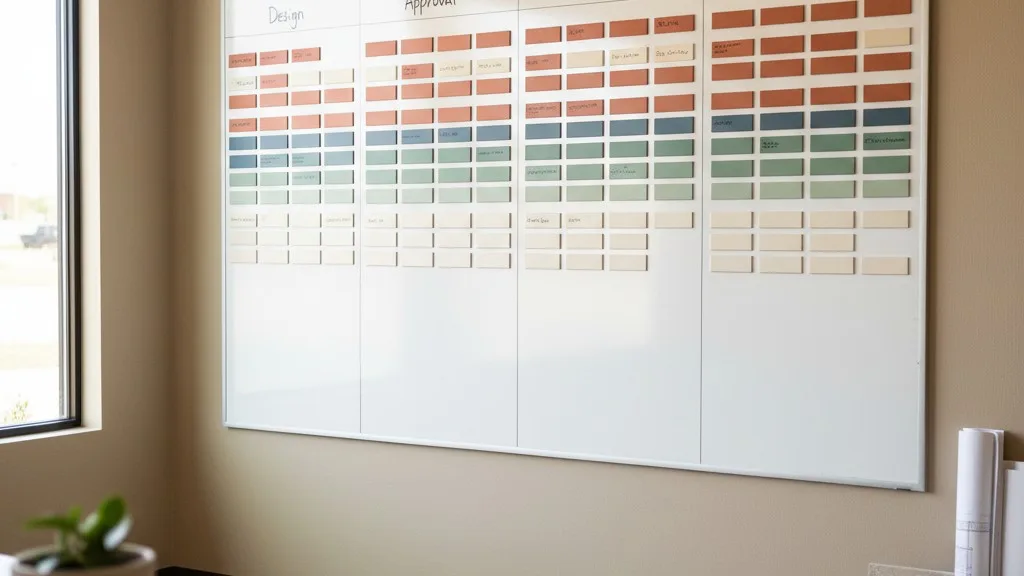

A single miscommunication in the monument approval process can lead to a costly recut, a delayed installation, and an upset family. When approvals are tracked through scattered emails, sticky notes, and verbal confirmations, the risk of error grows with every order. Establishing a clear, consistent process for managing design proofs and securing client sign-offs is essential for protecting your shop’s profitability and reputation.
This guide outlines a five-step framework for building a reliable monument approval process. By standardizing how you gather information, present designs, and track revisions, you can ensure the stone you cut is the stone the family approved, every single time.
1. Standardize Your Initial Design Consultation
A structured approval process begins long before you send the first proof. The initial consultation is your best opportunity to gather all necessary information, manage expectations, and prevent future misunderstandings. Treating this meeting as a systematic data-gathering step sets the foundation for a smooth design and approval workflow.

First, establish who the single, authoritative decision-maker is for the family. While many relatives may offer opinions, having one designated person responsible for final approval is critical. This prevents conflicting feedback and ensures you are acting on the family’s final, unified decision. Document this person’s name and preferred contact method clearly on the order form.
Next, use a comprehensive checklist to guide the conversation. A standardized intake form ensures you don't miss critical details. Key information to capture includes:
- Cemetery Regulations: Confirm the specific cemetery’s rules for size, material, and finish before any design work begins. Getting this wrong can force a complete redesign after the family has already approved a concept.
- Essential Inscription Details: Record the full name, date of birth, and date of passing. Double-check the spelling with the family during the meeting.
- Design Elements: Discuss initial ideas for stone type, shape, color, font styles, epitaphs, and symbols. Even rough ideas at this stage help the designer create a more accurate first proof.
A structured consultation does more than just prevent errors; it provides comfort to a grieving family. By guiding them through a clear and organized headstone planning process, you build trust and confidence, making them feel cared for during a difficult time.
2. Create a Centralized Digital Proofing System
Once a design is ready for review, the greatest risk becomes version control. Relying on email attachments, text messages, or printed drafts creates information silos where it's easy for a designer or salesperson to reference an outdated proof. A centralized system ensures everyone on your team is looking at the same information: the latest design and its current approval status.
This system can be as simple as a well-organized folder structure on a shared server, but this approach has limitations. A better solution is to use a system that connects the proof directly to the customer's order. For example, monument operations software like Petra keeps all order-related documents, including design files and communication notes, attached to a single job record. This means anyone from sales to production can instantly see the approved proof without hunting through email chains.
For each proof you send, your system should track a few key data points:
- Version Number: Clearly label each iteration (e.g., “Proof V1,” “Proof V2”).
- Date Sent: Record the exact date and time the proof was sent to the client.
- Recipient: Note who the proof was sent to, confirming it was the designated decision-maker.
- Feedback Received: Document all requested changes, no matter how small.
- Approval Status: A clear status, such as “Pending,” “Revisions Requested,” or “Approved for Production.”
Without a central source of truth, your shop is exposed to significant risk. A designer might make changes based on an old email, a salesperson might promise a detail that was later removed, or the production team could start carving from a non-approved draft. A centralized system for monument shop job tracking makes the approved design the undeniable focal point of the order.
3. Define Clear and Consistent Proof Formats
The design proof itself is your most important communication tool in the monument approval process. A proof that is confusing, incomplete, or hard to read invites errors and misunderstandings. To be effective, every proof you send should be standardized, providing the family with all the information they need to approve it with confidence.
Your standard proof template should always include:
- Clear Visuals: A scaled, black-and-white rendering is essential. Color can be subjective on different screens and printers, while a line drawing shows exactly what will be incised into the stone. Include dimensions and a clear depiction of the stone's shape.
- Complete Inscription Text: All text—names, dates, epitaphs—should be typed out for maximum clarity. This allows the family to proofread the text separately from the design, reducing the chance of a typo being missed.
- Itemized Specifications: List all key details of the order, such as the granite color, stone dimensions (height, width, thickness), and finish (e.g., polished, honed). This confirms the physical aspects of the monument alongside the design.
- An Approval and Signature Block: The most critical component. This section should include a clear statement that the family has reviewed and approved every detail shown on the proof. For example: “By signing below, I confirm that I have reviewed and approved all spelling, dates, design elements, and specifications on this document. I understand that this proof represents the final design for production.”
This formal sign-off transfers the responsibility of accuracy to the client. It prompts them to slow down and review the document carefully one last time. It’s not about assigning blame if an error is found later; it’s about creating a shared commitment to getting every detail right before the costly and irreversible step of carving begins.
4. Digitize the Signature and Approval Workflow
Waiting for a family to print, sign, and return a paper proof can add days or even weeks to your production timeline. This manual process is inefficient and prone to delays, as documents get lost in the mail or sit on a kitchen counter. A digital signature workflow accelerates the entire process, providing a secure, verifiable, and immediate way to capture final approval.

Modern e-signature platforms allow you to send a proof to a client’s email address, where they can review and sign it on their computer or smartphone with a few clicks. The signed document is then automatically sent back to you and archived, creating a clean digital paper trail. This method is not only faster but also more professional, showing families that your shop operates with modern efficiency.
When implementing a digital signature process, follow these best practices:
- Use a Verifiable System: Choose a reputable e-signature service that creates a tamper-evident audit trail. This log records when the document was sent, opened, and signed, providing robust proof of approval.
- Provide Clear Instructions: When you email the proof for signature, include simple, step-by-step instructions. Explain that they will receive a link to review and sign the document and that no printing is necessary. Reiterate that their signature authorizes production to begin.
- Confirm Receipt: Once the signed document is returned, send a brief confirmation email to the family. This closes the loop and lets them know that the monument is now officially in the production queue.
By removing the friction of paper, you reduce the time an order spends waiting for approval. This allows you to schedule production more accurately, improve your shop’s throughput, and provide families with a more responsive and streamlined experience.
5. Formalize the Hand-Off to Production
The moment a design is approved is a critical hand-off point. A breakdown in communication between the sales or design team and the production floor can undo all the careful work you’ve done. Simply emailing the approved PDF to the shop manager or leaving a printout on a desk is not enough; it leaves too much room for ambiguity and error.
Instead, create a formal “Ready for Production” status within your job management system. When a design is approved, the order’s status should be updated, signaling to the production team that they have a green light to proceed. This status change should automatically make the final, signed proof the primary document for the job. This ensures that the team in the back of the shop isn't working from a draft file saved on a local computer. They should only be able to access the one, and only one, approved version.
Your production kickoff checklist should confirm that the team has:
- The final, signed proof.
- Clear specifications for the stone material and size.
- The corresponding stencil file for the cutter.
- The physical stone slab or blank allocated from inventory.
This formal step acts as a final quality gate. It forces a deliberate check to ensure that all assets are correct and aligned before any irreversible work like sandblasting begins. Integrating this into your workflow, especially with a tool that links inventory and production scheduling, creates a seamless transition from client approval to finished monument. You can learn more about how these pieces fit together in this guide to essential software features.
Conclusion: From Process to Profitability
A haphazard monument approval process is a hidden drain on your resources and a risk to your reputation. By standardizing your consultations, centralizing your proofs, formatting them for clarity, and digitizing your signatures, you create a system that catches errors before they happen. This structured approach isn't about bureaucracy; it's about building a reliable workflow that protects your margins and gives families peace of mind.
When your approval process is clear and dependable, you spend less time fixing mistakes and more time creating meaningful memorials. If you're looking for a system to tie your sales, design approvals, and production together, see how Petra can help. Request a conversation to learn how our software provides a single source of truth for every monument order.