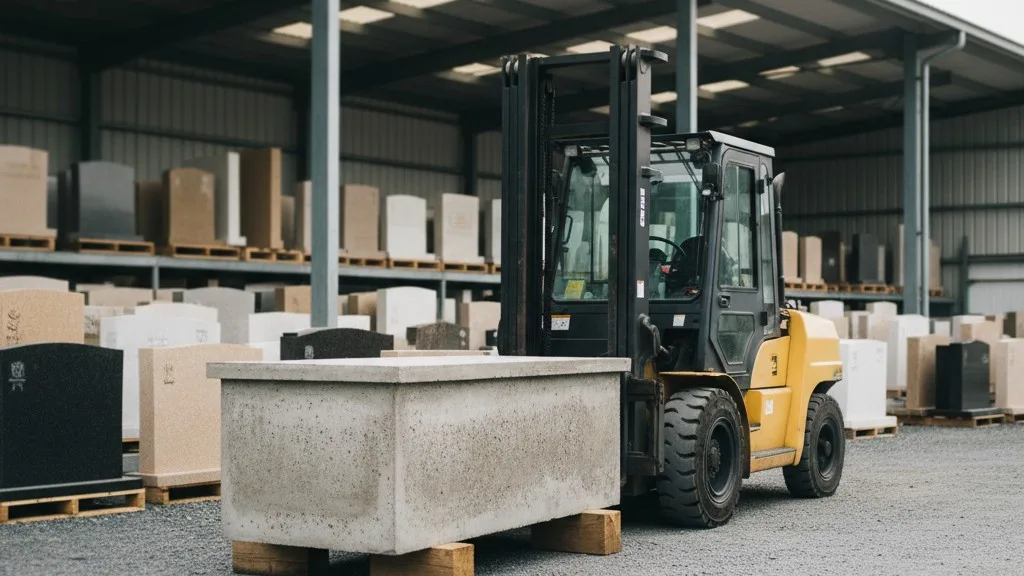
As the installation season winds down, the focus in a monument shop shifts from setting stones to securing the shop for the colder months. Preparing headstones for winter is not just about tidying up; it is a critical business process that protects your inventory, ensures the integrity of in-progress work, and sets your team up for a productive spring. A systematic approach prevents costly damage from freeze-thaw cycles and ensures that every monument, whether in the yard or on the production floor, is accounted for and protected.
Conduct a Thorough Inventory of Finished and In-Progress Monuments
Before the first deep freeze, you need a precise understanding of every piece of granite and bronze under your care. This goes beyond a simple count. It's about assessing the status, location, and condition of each monument to create a clear plan for winter storage and spring production. A disorganized yard or production floor is a liability when the weather turns.
Start by physically walking your yard and shop. Create a master list of every finished monument awaiting spring installation and every in-progress piece. For each item, document the following:
- Order or Job Number: The unique identifier that connects the physical stone to the family's order.
- Family Name: Double-check that the name on your list matches the work order.
- Current Location: Be specific. Is it in the main yard, a secondary storage area, on a specific production pallet, or in the sandblast booth?
- Production Status: Note exactly where it is in the workflow (e.g., 'awaiting sandblast,' 'design approved,' 'final wash complete,' 'ready for setting').
- Physical Condition: Inspect for any pre-existing issues. Note any concerns now to avoid disputes later.
This process can reveal monuments that have been overlooked or orders that have stalled. It’s your last, best chance before winter to ensure a monument scheduled for sandblasting isn't left exposed to the elements where it could be damaged. A detailed inventory list is also essential for insurance purposes, providing clear documentation of your assets in case of damage from a winter storm or other unforeseen event.
For shops managing a large volume of orders, this manual process can be time-consuming. Using a centralized system like Petra helps streamline this task. You can filter orders by status—such as 'awaiting spring installation'—and generate a report to use as your physical checklist. This ensures your digital records in monument inventory management match the physical reality in your yard, reducing the risk of a monument being lost in the shuffle.
Clean, Protect, and Store All Finished Monuments
Once you know what you have, the next step is to protect it. Water is the primary enemy of stone and bronze during winter. The freeze-thaw cycle, where water penetrates porous surfaces or small crevices, freezes, expands, and then thaws, exerts incredible pressure that can cause damage over time. Protecting finished monuments is about mitigating this risk.

Cleaning Procedures
Every monument waiting for spring installation must be thoroughly cleaned and, most importantly, completely dry before being stored. Water trapped in the sandblasted lettering or in the pores of the stone can cause spalling or surface damage when it freezes. Your cleaning process should be methodical:
- Initial Rinse: Use a low-pressure water spray to remove loose dust, dirt, and granite particles from the stone. Avoid high-pressure washers, which can damage delicate lettering or etchings.
- Gentle Scrub: For any stubborn grime, use a soft-bristle brush and a pH-neutral stone cleaner. Harsh, acidic, or alkaline cleaners can stain or etch the surface of the granite. Always test any new cleaning product on an inconspicuous area first.
- Thorough Rinsing: Rinse the stone completely to remove all traces of cleaning solutions. Any residue left behind can cause discoloration.
- Drying: This is the most critical step. Allow the monuments to air-dry completely in a covered, well-ventilated area. Using fans can accelerate the process. Do not cover or store a monument until you are certain it is bone-dry, both on the surface and within any carved areas.
Protective Wrapping and Storage
After cleaning and drying, proper storage is key. The goal is to keep the monuments clean and dry without trapping moisture. A common mistake is to wrap stones in non-breathable plastic, which can create a greenhouse effect, trapping condensation against the stone and leading to staining or freeze damage.
Instead, use breathable materials. Heavy-duty canvas tarps or specialized, breathable monument covers are ideal. If you must use plastic tarps, ensure there is adequate ventilation by placing wood spacers between the tarp and the stone, and leave the bottom open to allow air to circulate.
Store the monuments on sturdy pallets or dunnage, never directly on the ground. This elevates them above any potential snowmelt or standing water and prevents staining from soil or mud. Arrange them in your yard in a logical order, such as by scheduled installation date or cemetery section, to make retrieval in the spring more efficient. Clearly label each wrapped monument with the family name and job number so you can identify it without unwrapping it.
Review and Plan Your Production Schedule for Winter and Spring
Winter is not downtime; it's prep time. The work you do now on the shop floor determines how smoothly your next installation season begins. A well-planned winter production schedule allows you to get ahead on orders, perform essential equipment maintenance, and train staff without the constant pressure of delivery deadlines.
Start by reviewing all open orders. Categorize them based on their current status and required next steps. A good approach is to group them into three main buckets:
- Winter Production Queue: These are the orders that have approved designs and are ready for production. Prioritize these for sandblasting, shaping, and engraving during the quieter winter months. Completing these monuments now means they are ready for installation as soon as the ground thaws.
- Awaiting Approval/Details: This list includes orders where you are waiting on a final design approval, a cemetery permit, or other information from the family. Winter is the perfect time for proactive follow-up. A quick call or email can often get you the information needed to move the job into the production queue.
- New Orders/Spring Queue: These are new sales that come in during the winter or jobs that are intentionally scheduled for spring production. Having a clear view of this future workload helps you manage capacity and set realistic timelines with families.
This process of sorting and prioritizing is fundamental to effective monument shop job tracking. It transforms a long list of orders into an actionable plan. Once categorized, you can build a realistic production schedule. Assign specific jobs to be completed each week. This not only makes the workload manageable but also improves shop morale by providing clear goals and reducing the chaos of a last-minute spring rush.
Perform Essential Equipment Maintenance
The machinery in your monument shop works hard during the busy season. The slower pace of winter provides the perfect opportunity to perform the deep maintenance that is difficult to schedule when production is at its peak. This proactive approach prevents costly breakdowns during the spring rush, extends the life of your equipment, and ensures a safer working environment for your team.

Sandblast and Dust Collection Systems
Your sandblasting equipment is the heart of the production process, and its maintenance is non-negotiable. Begin with a thorough inspection of the sandblast booth. Check for wear and tear on the rubber lining and patch any holes or thin spots. Inspect the nozzle, hoses, and deadman switch for signs of wear and replace them as needed. A worn nozzle can decrease efficiency and produce an inconsistent finish.
Pay close attention to your dust collection system. Inhaling silica dust is a serious health hazard, and a properly functioning dust collector is needed for air quality. Change all filters according to the manufacturer's recommendations. Inspect the ductwork for leaks or blockages and check the fan and motor for proper operation. A clean and efficient dust collection system not only protects your team but also improves the performance of your sandblaster.
Compressors, Cranes, and Material Handling Equipment
Your air compressor is another critical component. Drain the tank of any accumulated moisture to prevent internal rust and freezing. Change the oil and replace the air filters. Listen for any unusual noises and check all belts and connections for wear.
Inspect all your material handling equipment, including overhead cranes, forklifts, and stone carts. For cranes and hoists, this is a safety-critical task. Check cables, straps, and chains for fraying or damage and replace them if there is any doubt about their integrity. Lubricate moving parts and test all safety features, such as limit switches and emergency stops. For forklifts, perform a full service, including checking tires, brakes, hydraulic fluid, and forks. Ensuring your lifting equipment is in top condition is paramount to preventing accidents.
By dedicating time to maintenance now, you are investing in a smoother, more profitable spring. An equipment failure in April can shut down your entire operation for days, leading to a cascade of delays and frustrated customers. Winter maintenance turns potential downtime into planned, productive work.
Organize Your Shop and Supplies for a Clean Start
The final step in preparing headstones for winter is to reset your physical workspace. A clean, organized shop is safer, more efficient, and a better environment for producing high-quality work. Over the course of a busy season, tools get misplaced, supplies get disorganized, and workspaces become cluttered. Winter is your chance to reclaim control.
Start with a top-to-bottom cleaning. Sweep and vacuum the entire shop floor, paying special attention to corners and areas under equipment where dust and debris accumulate. Wipe down workbenches, shelves, and machinery. A clean space makes it easier to spot potential hazards and maintain equipment.
Next, focus on organizing your tools and supplies. Create designated, labeled homes for everything. This includes hand tools, stencil supplies, setting compounds, and cleaning materials. A well-organized tool board or cabinet saves countless minutes that would otherwise be spent searching for a specific item. This is also a good time to take inventory of consumables like stencil, sandblasting grit, and setting supplies. Check your stock levels and place orders for anything you'll need for the first few months of spring. Running out of a critical supply in March can halt production just as it's ramping up.
Finally, evaluate your shop layout. Is the workflow logical? Is there wasted movement? The winter slowdown is an ideal time to consider minor reorganizations that could have a major impact on efficiency. Even small changes, like moving a workbench closer to a particular machine, can streamline a process and reduce physical strain on your team. This thoughtful organization prepares you not just for winter, but for a more productive year ahead.
Managing all these moving parts—from inventory and production to maintenance and supplies—requires a robust system. For shops looking to move beyond paper and spreadsheets, Petra provides a central hub to track orders, manage production schedules, and maintain visibility over your entire operation, even during the quiet months.
Your Winter Work Sets the Stage for Spring Success
Preparing your monument shop for winter is an investment in your business. By conducting a thorough inventory, carefully protecting finished stones, planning your production schedule, and performing essential maintenance, you safeguard your assets and your team. This disciplined approach ensures that when the ground thaws and families are ready for their memorials to be placed, your shop is ready to deliver without delay. It transforms the winter slowdown from a liability into a strategic advantage.
If you find yourself juggling spreadsheets and paper lists to manage this process, it might be time to see how a system designed for monument shops can help. We invite you to request a conversation to see how Petra can bring clarity to your inventory, production, and scheduling, season after season.