
Most software is built by software companies, not by the people who will use it every day. This often leads to a disconnect between the features on a screen and the realities of the shop floor. We know this because we lived it—for decades, our family’s burial vault and monument business ran on a patchwork of systems that never quite fit, so we decided to build our own funeral industry software from the ground up.
This isn’t just a company origin story; it’s an explanation of why Petra is designed the way it is. It’s the story of a system born from necessity, shaped by generations of hands-on experience in the death care profession. Understanding where our software came from will help you understand how it can solve the practical, daily challenges you face in your own operation.
A Vision of Integration: The Larkin Family Legacy
The story of Petra and its parent company, LarkTek, begins long before any code was written. It starts with the Larkin family, who have operated funeral homes in Utah since 1885. The family business wasn't just a job; it was a multi-generational commitment to serving communities during their most difficult times. By the 1980s, a young Lance Larkin, while still in college, began formalizing a concept that the family was already putting into practice: the vertical integration of the funeral profession.
This wasn’t just an academic idea. It was a practical vision for providing a more coherent, compassionate, and reliable experience for grieving families. The theory was simple: if a single, trusted organization could handle everything from the initial mortuary care to the cemetery burial, the flowers, and the permanent memorial, the process would be smoother for everyone. It would reduce the burden on families, who wouldn't have to coordinate with multiple different vendors during a time of immense stress.
Over the next several decades, the Larkin family turned this vision into a working reality. They expanded their services methodically, acquiring floral shops and cemeteries. They established dedicated divisions to manufacture burial vaults and create monuments and headstones. This created a vertically integrated company that included Larkin Mortuary, Rocky Mountain Monument & Vault, The Rose Shop, and Larkin Cemeteries. For the first time, all these essential services were operating under one guiding philosophy of care.
The Growing Pains of a Disconnected System
As the integrated business grew, so did its complexity. By the late 1990s, managing the flow of information between the funeral home, the vault plant, the monument shop, the flower shop, and the cemetery became a monumental task. The paper-based systems that had worked for generations were no longer sufficient. An order for a burial vault might originate at the funeral home, but the details needed to be communicated perfectly to the manufacturing team. The monument shop needed accurate specifications and engraving details. The cemetery needed to know the exact date and time for the interment. A single error could cascade through the system, causing delays, mistakes, and stress for both staff and families.

Recognizing the need for a more organized approach, the team turned to digital tools. Their first major step was a custom-built database using Microsoft Access. For a time, it was a significant improvement over paper ledgers and phone calls. It allowed for a central repository of information and provided a basic level of tracking. However, as the business continued to expand and the demands on the system grew, the limitations of this homegrown solution became apparent. It was difficult to maintain, prone to crashing, and couldn't scale to meet the needs of a multi-location, multi-division operation.
The search for a better solution began. The family explored various third-party software options, hoping to find a system that could manage their unique, integrated business model. What they found was a marketplace full of compromises. Some software was designed for funeral homes, but had no features for monument production. Other systems could handle manufacturing, but couldn't integrate with the cemetery's scheduling needs. The few platforms that claimed to do it all were often rigid, prohibitively expensive, or required extensive and costly customization that still didn't quite work.
The fundamental problem was that none of these tools were built by people who truly understood the interconnected nature of the death care profession. They couldn't facilitate the seamless communication required between the mortuary, the cemetery, the vault plant, and the monument shop. Each division ended up using its own software, creating information silos. Staff spent countless hours re-keying data from one system into another, a process that was not only inefficient but also a major source of errors.
Bridging Heritage with Modern Engineering
The breakthrough came when the next generation of the Larkin family brought a new set of skills to the table. David Larkin had spent years working outside the family business in high-level roles focused on data analytics, software development, and operational management for major corporations. He had seen firsthand how well-designed software could transform complex operations, streamline workflows, and provide clear, actionable insights.
When he returned to the family business, he brought with him this deep technical expertise. He looked at the operational challenges not just as a family member steeped in funeral traditions, but as an engineer. He saw the information silos, the duplicate data entry, and the constant workarounds not as unavoidable costs of doing business, but as solvable engineering problems. The family’s deep, century-long heritage in the funeral profession provided the “what” and the “why.” David’s experience in modern software development provided the “how.”
This combination of deep industry knowledge and high-level technical skill was the missing piece. The family realized that if they wanted a software solution that truly met their needs, they would have to build it themselves. They weren't just building an app; they were codifying decades of operational wisdom into a modern, scalable, and reliable system. The goal was to create the “perfect fit” that they had been searching for but could never find on the open market—a suite of tools designed by funeral professionals, for funeral professionals.
LarkTek: Software Born from Real-World Needs
The result of this effort was the creation of LarkTek, an independent software company with a singular mission: to build software that solves the real-world problems of the death care industry. The team set out to create a suite of interconnected products, each designed for a specific part of the vertically integrated business, but all built to work together.
This suite includes:
- Kindred: A comprehensive funeral home management system.
- Sunset: A tool for cemetery management, mapping, and scheduling.
- Orkyd: A point-of-sale and management system specifically for floral shops.
- Petra: The dedicated platform for burial vault and monument operations.
Each product was developed to stand on its own, but their true power lies in their ability to share information and streamline workflows across divisions. Petra, in particular, was designed to address the specific challenges of running a vault and monument shop. It was built to manage the entire lifecycle of an order, from the initial sale to final delivery and installation.
How This History Shapes Petra’s Design
Because Petra was born from a real, operating vault and monument business, its features are grounded in practical reality. It's not about adding bells and whistles; it's about solving the problems that cause headaches for shop managers, production crews, and delivery drivers every day.
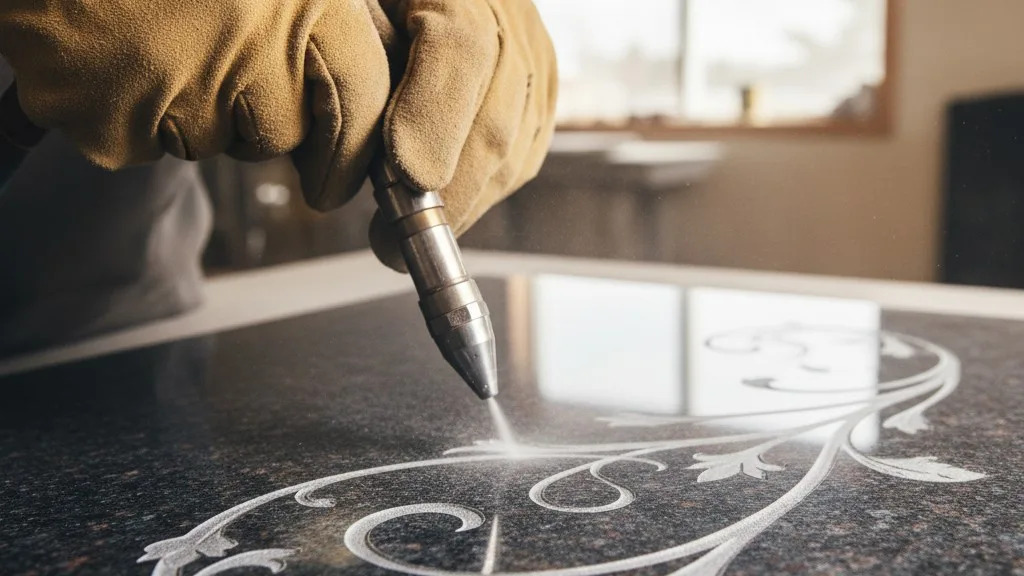
For example, we knew that many shops produce both burial vaults and stone monuments. Instead of forcing teams to use two different systems, we built Petra with a unified workflow. Whether you're quoting a vault or a custom headstone, the process for creating an order, tracking production, managing inventory, and scheduling delivery is the same. This reduces training time and eliminates the confusion of juggling separate tools.
We also knew that keeping the front office and the back office in sync is a constant challenge. That’s why Petra is a cloud-based system that provides a single source of truth. The sales team can see real-time production status, and the production team can see exactly what’s in the pipeline. This transparency reduces the need for constant phone calls and emails chasing down order updates. The system also connects directly with QuickBooks® Online, eliminating the tedious and error-prone task of re-keying sales and invoice data into your accounting software.
Every feature, from point-of-sale and inventory management to production tracking and delivery scheduling, was designed to address a specific pain point we experienced ourselves. We built the software we wished we had during all those years of struggling with spreadsheets and ill-fitting systems.
A Tool for the Trade, Shared with the Profession
For years, this software suite was our internal, proprietary solution. It ran our businesses and gave us the operational clarity we had been seeking. But we knew we weren't the only ones facing these challenges. We saw colleagues and other operators across the country struggling with the same issues: disconnected systems, inefficient workflows, and software that just didn't understand their business.
We decided to share the tools we had built with the wider profession. By making Petra and our other LarkTek products available to other businesses, we hope to give them the same advantages of a system that is truly built for their needs. Our history isn't just a marketing story; it's the foundation of our product philosophy. We believe that the best software comes from a deep understanding of the work it's meant to support. To learn more about our journey, you can read about the LarkTek story.
Running a vault and monument shop is a demanding job that requires precision, skill, and a deep sense of responsibility. The tools you use should support that work, not add to the complexity. That’s the principle we started with, and it’s the one that guides us today.
If you’re tired of juggling spreadsheets and disconnected software, and you’re looking for a system designed by people who understand the daily realities of your work, we’d be glad to show you how Petra works. Let's start a conversation.

